Busy household, shared space, pets, or just craving less stress? Floors still get dirty fast, and vacuuming can feel slow, noisy, and never quite good enough. Well, here it is: a streamlined set of vacuum tips to get a spotless home in less time. You’ll see how to match the right tool to your floors, lock in a repeatable routine that saves minutes each session, tackle pet hair and allergies with confidence, and keep suction strong without spending your weekend cleaning the vacuum itself. The result: less effort, cleaner air, and more time for what matters.
Understand Your Floors and Vacuum Features That Matter
Speed starts with fit. The fastest results come when your vacuum suits your floor type and air-quality needs. Carpets benefit from an adjustable brushroll (beater bar) that agitates fibers and lifts grit. Hardwood or tile? Keep the brushroll off—or use a soft-roller head—to prevent scattering and scratches. If your home mixes surfaces, a fingertip floor switch or auto-sensing head cuts stops and setting changes.
Filtration matters as much as suction. A sealed HEPA system traps very fine particles. True HEPA filters are rated to capture 99.97% of particles down to 0.3 microns, which helps allergy or asthma sufferers. What’s interesting too: authoritative guidance on filtration and indoor air is available from the U.S. Environmental Protection Agency at epa.gov and Allergy UK at allergyuk.org. If you tend to sneeze after vacuuming, prioritize phrases like “sealed system” or “HEPA H13/H14,” not just “HEPA-style.”
Formats should match your space and habits. Uprights shine on wall-to-wall carpet and cover big areas quickly. Canisters slip under furniture and handle mixed floors and stairs with ease. Cordless sticks are unbeatable for quick daily passes; check battery runtime and consider a spare for larger homes. Then this: a robot vacuum can patrol daily so dirt never piles up—more on automation later. For validated performance, consult the Carpet and Rug Institute’s Seal of Approval list at carpet-rug.org.
Attachments, used strategically, save serious time. A crevice tool handles baseboards; a dusting brush is ideal for vents and blinds; a mini motorized tool devours pet hair on sofas or stairs. In a small apartment, one high-quality stick vacuum with a motorized brush and soft floor head may replace multiple tools. In a multi-level house, keep a main machine downstairs and a lightweight stick upstairs to skip hauling gear.
A Fast, Repeatable Vacuum Routine for Every Room
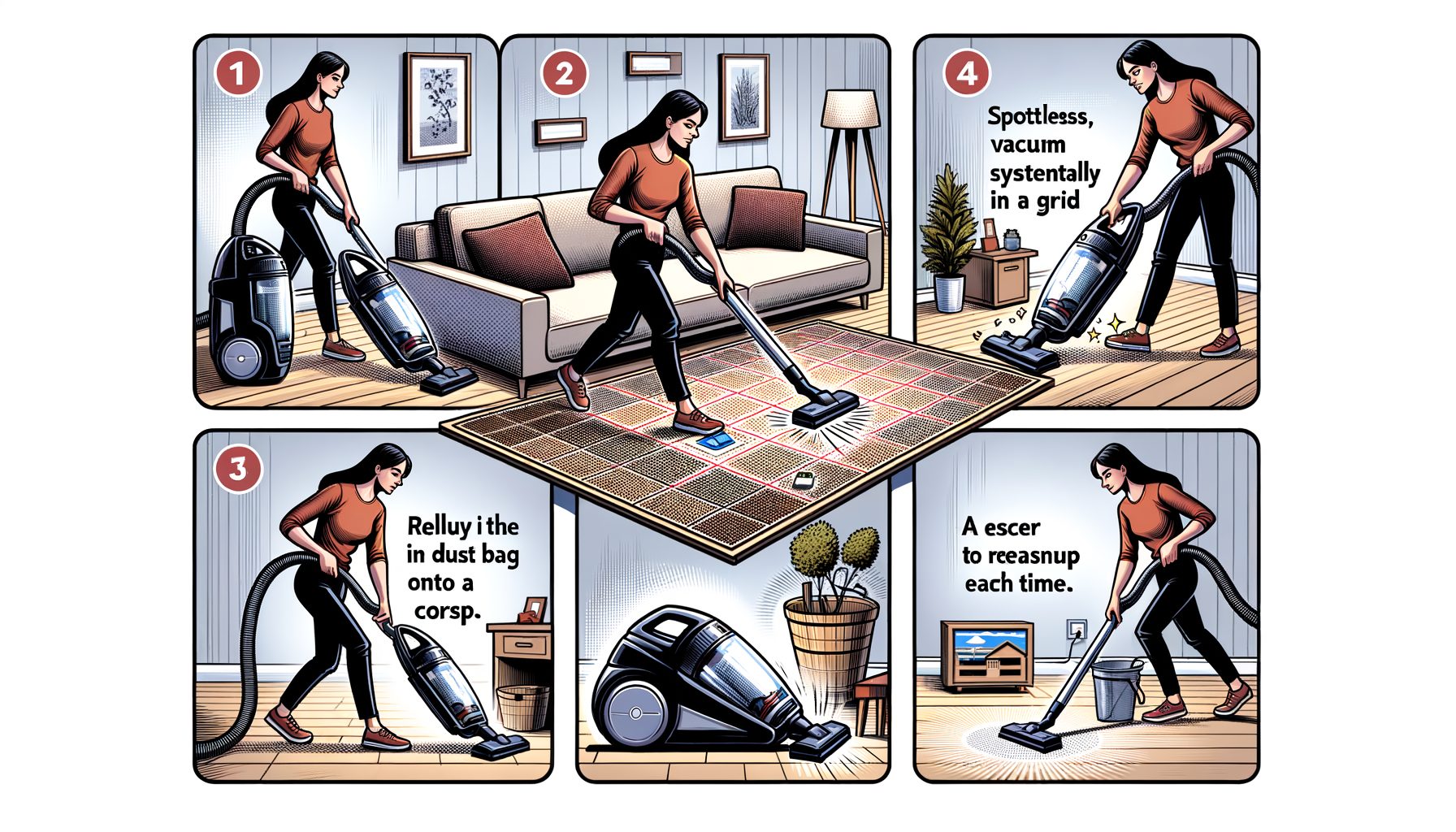
Speed isn’t about rushing; it’s about cutting wasted motions. Build a routine you can repeat room to room so you stay in flow and the floor gets consistently clean.
1) Prep in 60 seconds. Scoop up cords, socks, and small items. Shake debris off mats into one central area you’ll vacuum last. Dust first if needed so fallen dust is captured afterward.
2) Edge-to-center pass. Start with a crevice tool or edge mode around baseboards, table legs, and the perimeter. Debris is stopped from escaping to corners later, which reduces rework.
3) S-pattern on open areas. Move in overlapping lanes like mowing a lawn: forward, slightly over, back. On carpets, slower, deliberate passes pay off; two passes (forward and back) beat a single hurried sweep. On hard floors, a soft-roller head collects fine dust without snow-plowing crumbs.
4) High-traffic hot spots. Linger briefly at entryways, under the coffee table, pet hangouts, and in front of the sofa. One extra slow pass here prevents dirt from spreading during the week.
5) Finish with mats and rugs. Roll small rugs back halfway and vacuum under edges where grit hides; flip sides and repeat. If the rug is delicate, reduce suction or use a mesh pad to prevent sealing to the fiber.
6) Room order and cord plan. Start farthest from the door and work toward your exit to avoid footprints and keep movement efficient. With corded machines, plug near the center of the space or in a hallway to reach multiple rooms with one outlet change. Cordless users: try “zoning”—clean one level per battery and swap while tidying another area.
Pro tip: Time your routine once. If your living room takes six minutes at a steady pace, schedule eight on busy days and 12 for a deeper weekend pass. That rhythm keeps standards high without letting perfectionism steal your time.
Targeted Tactics for Pet Hair, Allergies, and High-Traffic Zones
Pet hair and gritty entryways often derail otherwise slick routines. Tackle them with targeted moves so they stop slowing you down.
Pet hair: A motorized mini brush on sofas, car seats, and stairs is a game-changer; spinning bristles grab embedded fur in one or two passes. On bedding and throws, a rubber grooming glove or squeegee gathers hair into clumps before a quick vacuum. If hair wraps your main brushroll, snip it off with blunt-end scissors weekly to prevent drag and belt wear. On hard floors, a soft-roller head or brushroll-off mode prevents hair tumbleweeds from being flung forward.
Allergies: Choose a sealed HEPA system and, when possible, empty dust bins outside to avoid re-releasing fine particles indoors. If you have seasonal allergies or asthma, the CDC recommends reducing exposure to triggers; regular vacuuming of carpets, mattresses (with an upholstery tool), and vents helps. Keep windows closed on high-pollen days and run an air purifier (with an appropriate CADR) while you vacuum to capture disturbed particles. Remember: slamming a full bagless bin into the trash creates a dust cloud—line the bin with a compostable bag or lower it gently into a larger trash bag before releasing the latch.
High-traffic zones: Place sturdy outdoor and indoor door mats to trap grit before it travels. Vacuum entrances and kitchen paths every one to two days; hit the rest of the home every two to three days. Runners in hallways reduce wear and cleaning frequency. Short on time? Spot-clean “zones of impact” (front door, under the dining table, pet feeding area) and schedule a weekly whole-home pass. For stuck-on crumbs, use a spritz of plain water to lightly dampen the area—wait a minute and vacuum; avoid soaking carpets, and never spray liquid into a vacuum head.
Stairs deserve a plan. Start at the top, use an upholstery or mini motorized tool, and vacuum risers first, then treads. Working downward prevents falling debris from dirtying cleaned steps. If your machine is heavy, park it at the bottom and use a long hose, or rely on a cordless stick for safety and speed.
Maintenance and Smart Automation: Keep Suction Strong with Less Effort
Most “slow” vacuums aren’t old—they’re clogged. A few micro-maintenance habits keep airflow high and noise low, which means faster cleaning and better air quality.
Empty bagless bins before they hit two-thirds full, and replace bags at roughly three-quarters capacity to avoid pressure loss. Wash or replace pre-motor filters monthly (more often with pets); replace HEPA filters every 6–12 months per your manufacturer’s schedule. Brushrolls should be cleaned weekly if you have long hair or pets; scissors and a seam ripper make quick work of tangles. Hoses get checked for blockages, and wheels get wiped so they don’t track grime.
Use the quick reference below to plan upkeep:
| Task | How Often | Why It Matters | Time Needed | Performance Gain |
|---|---|---|---|---|
| Empty bin/replace bag | When 60–75% full | Prevents airflow drop and dust leaks | 1–2 min | Smoother suction, less mess |
| Rinse pre-motor filter | Every 4–6 weeks | Keeps motor cool and suction steady | 5 min (+ drying) | Noticeably stronger pickup |
| Replace HEPA filter | 6–12 months | Caps fine particle release | 3–5 min | Cleaner air, fewer allergens |
| Clean brushroll | Weekly with pets; monthly otherwise | Prevents hair wrap and carpet drag | 5–10 min | Faster passes, deeper clean |
| Check hose/wheels/seals | Quarterly | Find leaks and clogs early | 5–8 min | Quieter, more efficient |
Automation multiplies your effort. A robot vacuum running daily or every other day keeps crumbs from piling up so your weekly manual vacuum is light and fast. Choose a model with mapping and “no-go zones,” and schedule it for times when you’re out. Many brands offer app-based mapping and routine control; see examples and setup guidance at iRobot Support. Integrate routines with geofencing or voice assistants: start the robot when your phone leaves home or say, “Clean the living room” before a study session. Services like IFTTT can connect devices without coding.
If you rely on a cordless stick, store it on the dock so the battery is ready. For long-term battery health, avoid fully depleting lithium packs; many makers advise partial charges and cool storage—check your brand’s manual (for example, see Dyson Support). Finally, pair your routine with an air purifier in shared spaces to capture what vacuuming kicks up. The EPA’s guidance on Clean Air Delivery Rate (CADR) helps you size it right for your room at epa.gov.
Q&A: Quick Answers to Common Vacuuming Questions
How often should I vacuum?
High-traffic areas and entrances: every 1–2 days. Living spaces: 2–3 times per week. Bedrooms: weekly. With pets or allergies, increase frequency or run a robot vacuum daily to maintain a cleaner baseline.
Do I really need a HEPA filter?
If anyone in your home has allergies or asthma, yes—a sealed HEPA system reduces fine particles and can ease symptoms. For others, HEPA is still a plus because it prevents dust from blowing back into the room.
Bagged or bagless: which is better?
Bagged vacuums are cleaner to empty and often better for allergies. Bagless save on ongoing costs and let you see when it’s full. Performance depends more on sealing, filtration, and maintenance than on format.
Why does my vacuum smell or blow dust?
Common causes include a full bin/bag, clogged or dirty filters, or leaks around seals. Empty the bin, wash or replace filters, check for clogs, and inspect gaskets. If odors persist, clean the brushroll and hose; avoid scented powders that can clog filters.
Are robot vacuums worth it in small apartments?
Yes—daily maintenance runs keep crumbs down so your weekly manual clean is quick. Choose a slim model that can clear thresholds and fit under sofas. Avoid fringe rugs or set no-go zones.
Conclusion: Make Clean Floors a Fast, Automatic Win
You’ve seen how small, smart changes add up: match your vacuum to your floors and filtration needs, follow a simple edge-to-center routine, hit pet hair and high-traffic zones with the right tools, and keep suction strong with light but regular maintenance. Add a robot vacuum or a well-timed schedule, and the dirtiest areas stop snowballing into big weekend cleanups. The reward is real: cleaner air, calmer mornings, and more time for friends, study, side projects, or simply a quiet cup of coffee.
Start now with one action you can finish in five minutes: empty the bin or bag, rinse the pre-motor filter, or snip hair from the brushroll. Next, set a two-day robot schedule or drop a 10-minute “vacuum sprint” on your calendar for the highest-traffic room. If you’re choosing a new machine, bookmark the Carpet and Rug Institute list and the EPA’s HEPA guidance, then pick a model that fits your floors, your space, and your energy level.
Consistency beats intensity. A quick daily pass in the entryway plus a weekly whole-home routine will outperform a once-a-month marathon every time. Ready to try it tonight? Pick a room, run the edge pass, then clean in tidy S-lanes toward the door. You’ll be surprised how much cleaner it looks in minutes.
Clean floors are not just a task; they’re a tiny system that supports bigger life goals. Build the system once, and it keeps paying you back—day after day. Then this: what’s the first five-minute move you’ll make to win your next clean?
Sources and Helpful Links
– U.S. Environmental Protection Agency: Guide to Air Cleaners in the Home — https://www.epa.gov/indoor-air-quality-iaq/guide-air-cleaners-and-air-filters-home
– Allergy UK: HEPA Filters — https://www.allergyuk.org/resources/hepa-filters/
– CDC: Asthma Triggers — https://www.cdc.gov/asthma/triggers.html
– Carpet and Rug Institute: Seal of Approval — https://carpet-rug.org/testing/seal-of-approval-program/
– iRobot Support (robot vacuum setup and mapping) — https://support.irobot.com/
– IFTTT (automation routines) — https://ifttt.com
– Dyson Support (maintenance guidance example) — https://www.dyson.com/support